The 2026 R&D tax relief stats were released on 29th September and make for interesting reading, especially for those in the sector who work with SMEs. As with last year, the news overall is mostly negative, with a 19% drop in SME claims between 2023/24 and 2024/25. This means that the number of claims made by SMEs has dropped by nearly 56% since 2020/21 (compared to a 10% drop for Large Companies).
The statistics also continue to show a ‘transfer’ of benefit from small SMEs to Large Companies. The value of support given to SMEs in 2024/25 has dropped by 12% compared to 2023/24, whereas the support given to Large Companies has increased by 24%. This is also reflected in the disproportionate reduction in smaller claims and increase in very large claims.
Overall though, the main takeaway from the statistics must be that, even with HMRC’s having increased compliance and the reduced tax benefit available over this period, the cost of the R&D scheme has increased by nearly 20% since 2020/21.
For the second year running, the effect of HMRCs changes and compliance behaviour over the past few years is very easy to see in the statistics. This year is the first that includes claims made under the Merged RDEC scheme, so we’ll be presenting the data to show changes by size of company rather than specific scheme.
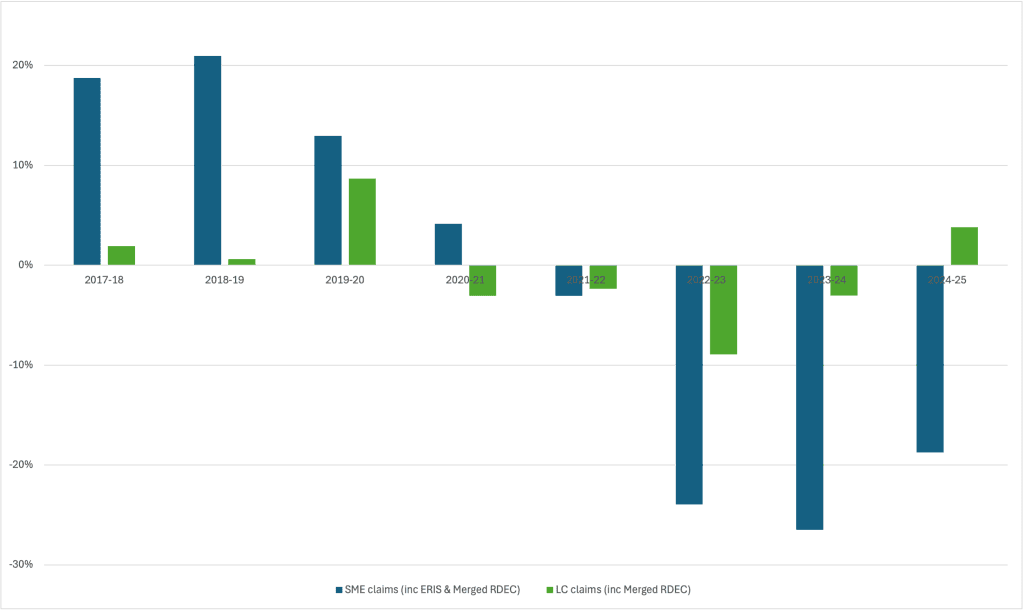
Looking at figure one, we can see that the number of claims made by both SMEs and LCs increased by around 20% year on year until the 2019-20 claim year. This trend has reversed over subsequent years, with a 26% drop in SME claims in 2023/24 and a 19% drop in 2024/25. The story is very different for Large Companies, with only a 3% drop in 2023/24 and a 4% increase in 2024/25.
This drop in claims can be in the main to attributed to HMRC’s compliance activity and subsequent changes made to the scheme. However, this continued disproportionate decrease in claims made by SMEs suggests that we’re seeing the impact on the confidence of SMEs to make claims.
Figure 1: Year on year change in the number of claims made by SMEs and Large companies
As always, this reduction in claim number has to be analysed alongside the changes in the value of claims made to get the full picture of the impact of the changes.
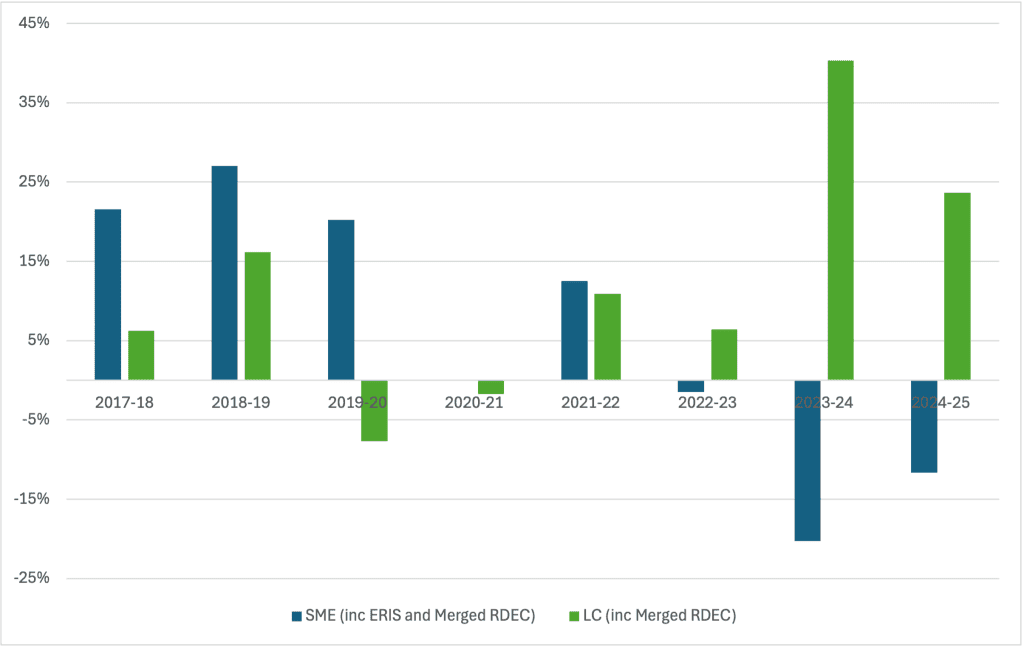
Figure 2 shows that the reduction in the number of claims made by SMEs has led to a proportionate drop in the value of these claims, as would be expected. The profile of Large Company claims is very different. The value of these claims increased throughout this period of uncertainty, with jumps of 40% in 2023/24 and 24% in 2024/25. This can be attributed to the increase in benefit available through RDEC for expenditure incurred after 1st April 2023 alongside their seeming strong confidence in continuing to claim relief.
Figure 2: Year on year change in the value of R&D tax relief claims.
Looking a little deeper into the changing profile of claims, figure 3 shows how the number of claims made in each cost band has changed from claim year 2023/24 to 2024/25. What this shows is that the number of claims with a benefit of less that £20k has significantly reduced, whereas the number of claims for a tax benefit of >£500k has significantly increased.
Figure 3: Changes in the number of R&D tax relief claims made by cost band for claim year 2024/25 compared to the previous period.
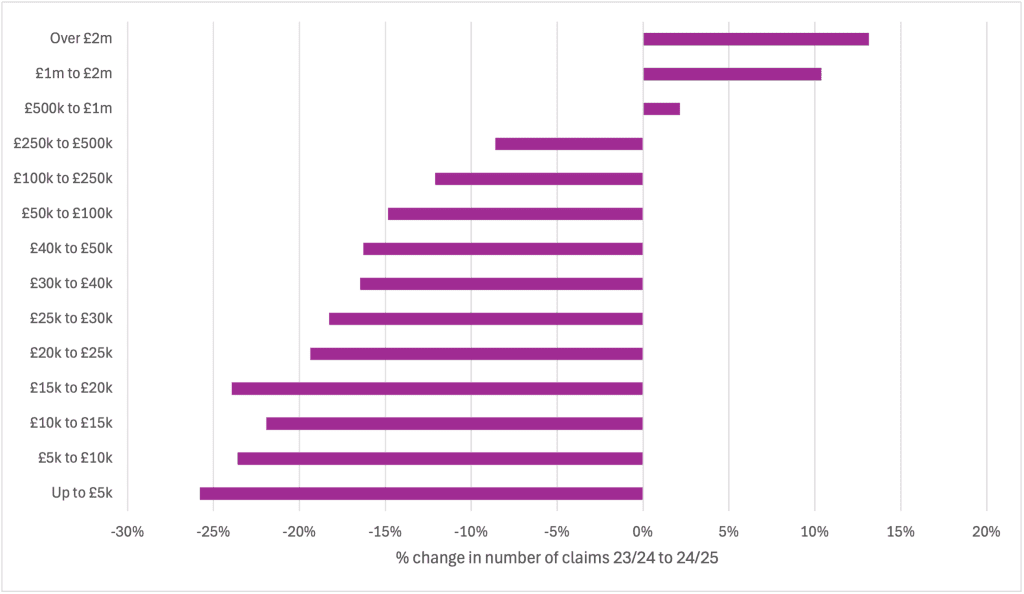
This ‘transfer’ of value from the small claim end to the large claim end explains why the reduction in overall cost of the R&D scheme is not proportionate to the reduction in the number of claims. It’s also more evidence that the changes made have benefited larger companies at the cost of smaller SMEs.
The 2026 statistics continue the trends seen last year – a sharp reduction in SME claims, an increase in large claims and a marked shift in value towards large companies. While HMRC’s interventions have changed the profile of R&D tax relief, the overall cost of the scheme has continued to increase. This is more evidence that the policy has reshaped where support is allocated rather than reducing government spend.
The coming years will reveal whether the merged scheme stabilises these trends or accelerates them further. The challenge ahead must be to ensure that innovation at the SME level – where so much economic growth begins – is not lost in the process.
Subscribe to email updates
© 2026 Wobbegong Technology Ltd (Registered number 10754811), trading as WhisperClaims.
WhisperClaims is a registered trademark of Wobbegong Technology Ltd (Trade Mark No.: UK00003360482).


